
Dental Veneers
Play With Sound
Do you struggle with the appearance of your smile? Maybe there is one tooth that has always bothered you, or perhaps you are ready for a more noticeable smile transformation. Porcelain dental veneers offer a highly customizable way to improve the color, shape, size, symmetry, and overall appearance of your teeth.
At Middle Tennessee Prosthodontics, veneers are approached with the precision you would expect from specialists in restoring and rebuilding smiles. Our prosthodontists complete years of advanced education beyond dental school, including extensive training in cosmetic and restorative procedures such as porcelain veneers.
If you are considering porcelain veneers in Brentwood, TN, contact Middle Tennessee Prosthodontics to schedule a consultation and discover what is possible for your smile.
What Are Porcelain Veneers?
Porcelain veneers are wafer-thin, custom-made restorations designed to cover the visible front surface of a tooth. Once bonded into place, a veneer can change the tooth’s color, shape, size, length, and overall appearance.
Unlike a crown, which covers the entire visible portion of a tooth, a veneer generally covers the front surface primarily. This allows veneers to provide a dramatic cosmetic improvement while preserving more natural tooth structure when clinically appropriate.
Let Veneers Help
If you have chips, cracks, stubborn stains, discoloration, uneven teeth, or other cosmetic imperfections, you may feel self-conscious about your smile. Veneers can address several of these concerns at the same time, creating a more balanced smile without requiring multiple separate cosmetic treatments.
Veneers may be recommended for patients who have discoloration that does not respond adequately to professional whitening or teeth that are chipped, worn, uneven, misshapen, or otherwise cosmetically distracting.
They can also be used across several teeth to create greater symmetry throughout the smile.
However, beautiful veneers involve much more than simply placing porcelain over your teeth. Their appearance depends heavily on how they are designed, prepared, fabricated, and bonded. That is one reason choosing a dentist with extensive restorative and cosmetic training can make such an important difference.


Why Prosthodontic Training Matters for Veneers
Many general and cosmetic dentists offer porcelain veneers. Our prosthodontic doctors bring an additional level of specialized training to the process. A prosthodontist is a dental specialist with advanced education focused on restoring and replacing teeth. After completing dental school, prosthodontists complete an additional three years of intensive specialty training.
That advanced education includes complex restorative dentistry, dental aesthetics, crowns, bridges, implants, dentures, bite relationships, and treatments such as porcelain veneers.
In other words, our doctors have spent years studying not only how a beautiful tooth should look, but also how restorations need to fit into the larger picture of your smile and bite.
Veneers may be considered a cosmetic treatment, but they are still dental restorations. At Middle Tennessee Prosthodontics, we approach them with the same level of planning and precision we bring to complex restorative dentistry.
What Can Porcelain Veneers Correct?
One reason veneers remain such a popular cosmetic dentistry treatment is their versatility. A carefully designed set of veneers can address several cosmetic concerns simultaneously.
Veneers may be appropriate for:
Not every cosmetic problem should be treated with veneers. Part of our responsibility is determining when another treatment would better protect your oral health or produce a more predictable result.


Enhance Your Future smile Today!
Schedule your visit today to see your own personal results for a perfect smile tomorrow. No obligation!

The Benefits of Dental Veneers
Porcelain veneers provide a versatile approach to transforming a smile. They are generally more conservative than full crowns while providing a longer-lasting cosmetic change than treatments such as whitening.
Benefits can include:
- Natural Appearance: Carefully designed porcelain can reproduce many of the characteristics of natural enamel.
- Highly Customizable: Every veneer can be designed according to the individual tooth and your overall smile.
- Multiple Improvements at Once: Color, shape, size, spacing, and symmetry can sometimes be addressed within the same treatment.
- Stain Resistance: Porcelain is highly resistant to many of the substances that stain natural enamel.
- Durability: Properly planned and cared-for veneers can provide beautiful results for many years.
- Conservative Treatment: Veneers generally require less tooth reduction than full-coverage crowns.
- Simple Maintenance: Veneers are brushed and flossed much like your natural teeth.
- Confidence: Correcting features that have bothered you for years can make you much more comfortable sharing your smile.
A patient’s perspective
The moments that matter
“They’re so kind and caring. Dr. Patel is so skilled and does amazing work.”
The Porcelain Veneer Process
Veneer treatment typically takes place over multiple visits. Because each case is customized, your exact process may vary.

The Art and Science Behind a Natural-Looking Veneer
There is a major artistic component to cosmetic dentistry.
Natural teeth are not simply flat pieces of white material. They have subtle differences in color, translucency, texture, contour, and the way they reflect light.
Creating veneers that look like beautiful natural teeth requires understanding these details.
Our doctors have received extensive hands-on training in ceramic layering from world-renowned ceramist Yasu Kawabe. This training provides a deeper understanding of the artistry involved in creating lifelike dental ceramics.
Why does that matter for your smile?
Because the goal isn’t to give every patient the same set of teeth, your veneers should look like they belong to you.
When designing your smile, we can consider characteristics such as the shape of your face, proportions of your teeth, gum line, smile line, surrounding teeth, and overall cosmetic goals. We can then create a treatment plan designed specifically around those features.
We will never simply choose a generic mold and expect your smile to conform to it. Our philosophy is reflected in our motto: Precision Care, Beautiful Results.
See Our Patients’ Before and Afters
Every smile is different, which means every cosmetic treatment should be different too.
Seeing previous veneer and cosmetic dentistry cases can help you understand how personalized treatment can change the appearance of a smile while maintaining natural-looking characteristics.
Take a look at some of the smiles our team has helped transform.
Why Precision Matters When Placing Veneers
Veneers are extremely thin, which is one reason they can look so natural. That thinness also means there is very little room for error.
Small differences in preparation or positioning can affect the final appearance. That is why we take a precision-focused approach throughout the veneer process.
Our prosthodontists have advanced training in the design and placement of dental restorations. Their education extends beyond the cosmetic surface of a tooth to include the relationship between restorations, surrounding teeth, gums, and bite.
We carefully evaluate how each veneer fits into the overall smile rather than viewing it as an isolated restoration.
This can be especially important when several veneers are being placed together. Small discrepancies can become much more noticeable across multiple front teeth, making careful planning and execution essential.
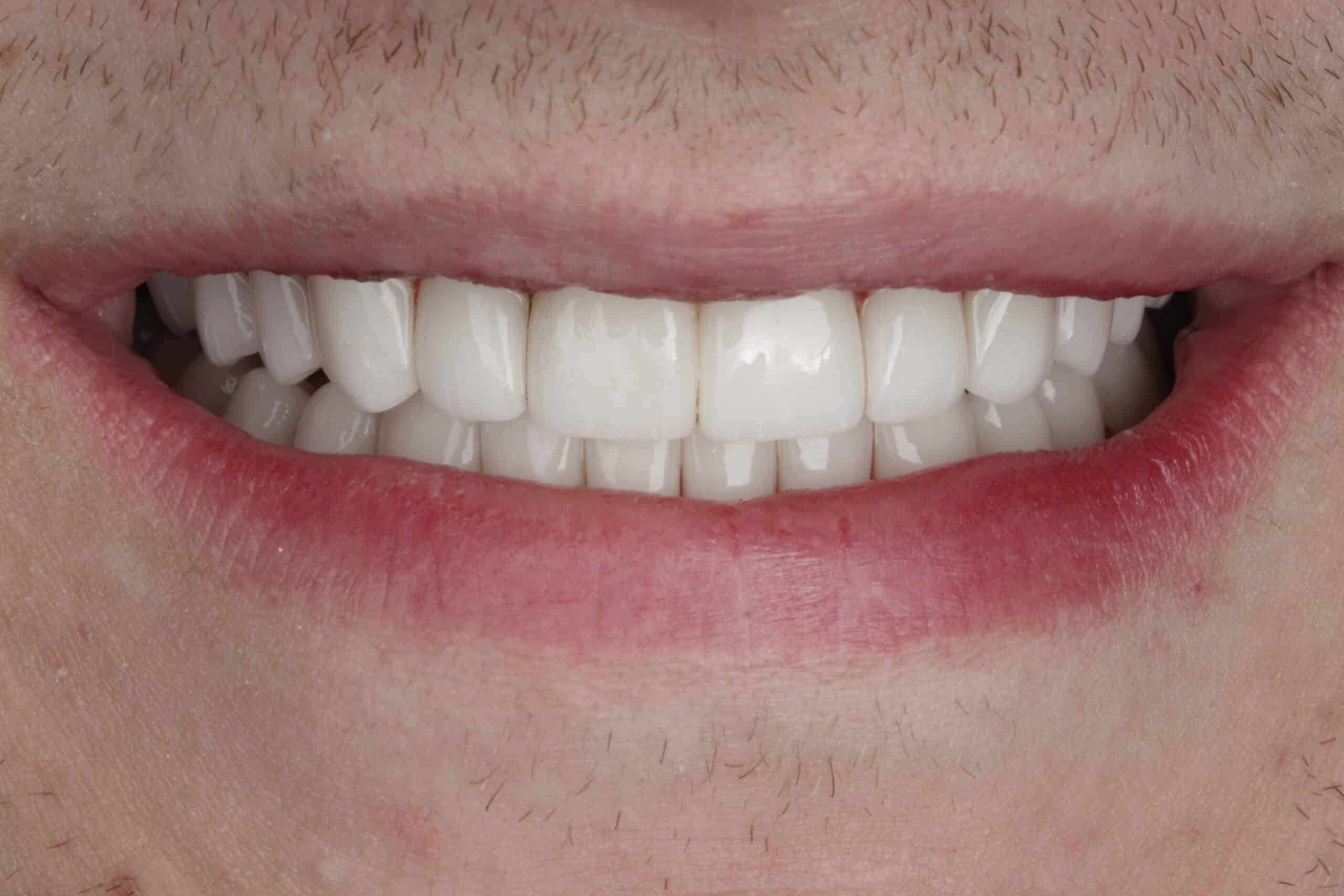
Veneers vs. Crowns: Which One Is Right for You?
Both veneers and crowns can dramatically improve a tooth’s appearance, but they serve different purposes.
Veneers cover the visible front surface of a tooth primarily.
They are commonly used when the tooth is generally healthy but needs cosmetic changes to its color, shape, size, spacing, or visible alignment.
Because veneers typically require less tooth reduction than crowns, they can provide a more conservative solution when appropriate.
Crowns cover the entire visible portion of the tooth.
They are often recommended when a tooth has significant decay, fractures, extensive existing dental work, or another structural concern. A crown provides more comprehensive coverage and protection.
Crowns can also be used as restorations over dental implants, whereas veneers require a natural tooth underneath them.
At Middle Tennessee Prosthodontics, you don’t need to decide which option you need before coming to see us. Our prosthodontists specialize in evaluating and restoring teeth and can recommend the treatment that makes the most sense for your individual situation.

Veneers vs. Teeth Whitening
If discoloration is your only concern, professional teeth whitening may be the simpler treatment.
Whitening brightens your natural enamel but does not change the shape, size, spacing, or position of your teeth.
Veneers can change both color and visible tooth structure. They may therefore be a better option when discoloration occurs alongside concerns such as chips, worn edges, small gaps, or uneven shapes.
Some stains also originate deeper within the tooth and may not respond sufficiently to whitening. Veneers can conceal these areas rather than attempting to bleach them.
During your consultation, we can help determine whether whitening, veneers, or another cosmetic treatment makes the most sense.
Sedation Dentistry for Your Veneer Process
Even an exciting cosmetic transformation can feel intimidating if you experience dental anxiety.
Middle Tennessee Prosthodontics offers sedation options to help make dental treatment more comfortable.
Nitrous oxide, commonly called laughing gas, can provide mild relaxation during treatment. For patients who require a deeper level of sedation, IV sedation may also be available when appropriate.
Let us know if anxiety has made you hesitant to pursue cosmetic dentistry. We can discuss your concerns and determine how to make your experience as comfortable as possible.

Why Choose Middle Tennessee Prosthodontics for Veneers?
When you are changing the teeth at the center of your smile, experience and attention to detail matter. At Middle Tennessee Prosthodontics, veneers are never a one-size-fits-all treatment.
Our doctors have completed three years of advanced prosthodontic specialty training beyond dental school, including extensive training in veneers, dental restorations, aesthetics, function, and treatment planning.
They have also received hands-on training from world-renowned ceramist Yasu Kawabe, gaining a deeper understanding of the details that help porcelain look like natural teeth.
Our veneer approach focuses on:
- Precision: Careful planning, preparation, fitting, and placement.
- Natural Aesthetics: Designing veneers that complement your facial features and surrounding teeth.
- Function: Making sure your veneers look beautiful while working comfortably with your bite.
- Personalization: Creating a smile designed specifically for you, rather than a one-size-fits-all look.
The result is a thoughtful combination of science and artistry designed to give you a beautiful, natural-looking smile.
Veneers FAQs
We understand that any dental procedure comes with questions. You can always ask our dentists your questions during your consultation or call our office.
Schedule a Consultation Today!
Your smile is one of the first things people notice about you. If you are going to change it, you deserve a treatment plan designed with careful attention to both beauty and function.
At Middle Tennessee Prosthodontics, our approach to veneers goes beyond choosing a shade and covering the front of a tooth. Our prosthodontists bring years of advanced specialty education to cosmetic treatment, along with hands-on training in ceramic artistry from world-renowned ceramist Yasu Kawabe.
If you are considering porcelain veneers in Brentwood, Nashville, or the surrounding Middle Tennessee communities, schedule a consultation with Middle Tennessee Prosthodontics. We can evaluate your smile, listen to your goals, and determine whether custom porcelain veneers are the right way to achieve the smile you have been envisioning.
You deserve a smile designed specifically for you.
Meet the Doctors

Dr. Bryan McLaughlin
Dr. Bryan McLaughlin is a Board-Certified Prosthodontist who combines advanced specialty training with a thoughtful, patient-centered approach. His background in prosthodontics, digital dentures, and complex restorative care allows him to help patients rebuild comfort, function, and confidence in their smiles.

Dr. Nisha Patel
Dr. Nisha Patel is a Board-Certified Prosthodontist with extensive experience in advanced restorative care, digital dentistry, and comprehensive treatment planning. She brings warmth, skill, and attention to detail to her care while helping patients work toward healthier, stronger smiles.

Dr. Stephen Peterman
Dr. Stephen Peterman is a Board-Certified Prosthodontist with a strong background in advanced restorative dentistry, military dentistry, and dental education. He is dedicated to helping patients restore comfort, function, and confidence through clear communication and high-quality prosthodontic care.